Friday, July 3, 2015

The Historic Eisele Vineyard: A Napa Valley First-Growth

 As the SR 29 highway begins to wend more northwesterly at Bale Lane and crosses Ritchey Creek, one crosses the AVA border into the famed Calistoga Viticultural Area at Napa’s most northerly corner.  Resting atop the highest concentration of volcanic soils of any of Napa’s subregions and boasting both the highest diurnal temperature variation and the greatest steeply-sloped-hillside-to-valley-floor vineyard ratio in the valley, Calistoga is able to yield some of Napa’s most distinctive wines.  And one of Calistoga’s – and Napa’s – greatest jewels is the legendary 35-acre Eisele Vineyard in the northeastern foothills.

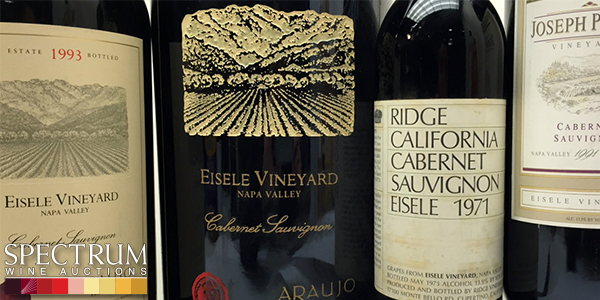
The modern history of the Eisele Vineyard began when it was purchased by Milton and Barbara Eisele in 1969.  Over the subsequent 21 years, the Eiseles supplied acclaimed fruit to some of California’s benchmark wineries, including Ridge (1971), Conn Creek (1974), and Joseph Phelps (1975-1991).  Then, in 1990, Bart and Daphne Araujo purchased the Eisele estate and proceeded to invest in temperature-controlled caves, property and vineyard advancements ultimately resulting in both organic and biodynamic certification, and the property’s first winery.

From 1991 through 2013, the Araujos produced superlative Cabernet Sauvignon (as well as Sauvignon Blanc, Viognier, and Syrah) from this historic vineyard.  And their tireless efforts did not go unnoticed: scores in Robert Parker’s The Wine Advocate have averaged over 95 points since 1991, and the 2013 was recently awarded a potentially perfect barrel score of 96-100.  And alas, in the same year, Fraçois Pinault’s Groupe Artemis, the longtime owners of Château Latour, Château Grillet, and Domaine d'Eugénie (formerly Domaine René Engel), purchased Araujo and its Eisele Vineyard, beginning a new chapter in this storied property’s history.

And so today we are proud to offer an extraordinary selection of wines from the Eisele Vineyard in our Summer 2015 Auctions.  While historic inaugural vineyard-designate Eisele Cabernet bottled by Ridge Vineyards in 1971 was just sold in our Live Auction (Lot 91), the current online sessions feature an additional twenty-one outstanding Eisele lots dating back to the great Joseph Phelps Eisele Vineyard 1986, here in double-magnum format (Lot 3578).  The current offer includes two vintages of Phelps Eisele (1986 and 1991), the Araujo Sauvignon Blanc and Viognier across three vintages, and the Araujo Estate Cabernet Sauvignon ranging from 1991 through 2008 in bottle, magnum (1.5L), double-magnum (3L), and rare imperial (6L) formats.

Lot 2076 deserves special mention, however: this lot showcases one bottle of Araujo’s rare Vieilles Vignes bottling from Araujo’s inaugural 1991 vintage.  The Vieilles Vignes, only produced from 1991-1998, was produced from the vineyard’s oldest, head-trained, Eisele clone vines planted on St. George rootstock in 1964.  This block was the source of the legendary 1971 Ridge Eisele, 1974 Conn Creek Eisele, and 1975 Phelps Eisele bottlings.  The Vieilles Vignes bottling was discontinued in 1998 when the old Block 3 vines finally succumbed to virus.  This wine was not commercially released; indeed, this Lot represents the only available offering of the ’91 Vieilles Vignes in the world.

Lot 2073. Araujo Estate Cabernet Sauvignon Eisele Vineyard 1993. 1 Imperial, 6L.
Score: 96RP
Estimate: $1,200.00, Current Bid: $1,100.00
Lot 2071. Araujo Estate Cabernet Sauvignon Eisele Vineyard 1994. 1 Imperial, 6L.
Score: 95RP
Estimate: $1,800.00, Current Bid: $1,400.00
Lot 2069. Araujo Estate Cabernet Sauvignon Eisele Vineyard 1996. 1 Imperial, 6L.
Score: 94RP
Estimate: $1,300.00, Current Bid: $1,100.00
Lot 2065. Araujo Estate Cabernet Sauvignon Eisele Vineyard 2001. 6 Magnums, 1.5L.
Score: 99RP
Estimate: $2,500.00, Current Bid: $2,000.00
Lot 2076. Araujo Estate Cabernet Sauvignon Eisele Vineyard Vieilles Vignes 1991. 1 Bottle, 0.75L

"First produced in 1991, the Vieilles Vignes was made from Block 3, the estate’s oldest vines of head-trained Eisele clone Cabernet Sauvignon planted in 1964 on St. George rootstock. Block 3 was the source of the 1971 Ridge, 1964 Conn Creek and 1975 Joseph Phelps Eisele Cabernets, all iconic, benchmark wines for the property and Napa Valley. Araujo made just one barrel of the Vieilles Vignes each year until 1998, when the vines finally succumbed to leaf roll virus. At the time, the rest of the fruit off Block 3 went into the Estate Cabernet Sauvignon bottling. The Vieilles Vignes was always 100% Cabernet Sauvignon and was not released commercially, but mostly given as gifts.Readers fortunate enough to own . . . [one] are in for a real treat." - Antonio Galloni, Vinous.

Score: 95RP
Estimate: $400.00, Current Bid: $150.00

Wednesday, July 1, 2015

Didier Dagueneau: The Loire Valley’s Legendary Dissident Conscience

Just as the hopeful harvest of a complicated vintage began to take shape in September 2008, news began to trickle in to Pouilly that the plane carrying one of France’s greatest winemakers had gone down in the Dordogne.  Even though this man – the Loire Valley’s great dissident conscience, Didier Dagueneau – had only been releasing his own wines since 1982, he had in short order made an indelible mark on the history of the Loire Valley and on the genre of white winemaking generally.  Thus not only was the tightly-knit wine community of the Centre-Loire shaken by his loss, but the world’s greater wine community was as well.

Didier’s uncompromising standards, rigorous attention to detail, appetite for risk, and fervent desire to make the greatest Sauvignon Blanc in the world are legendary.  But it was his love of his region’s vines that drove him to devote an enormous amount of time, capital, and attention to the cultivation of great, ageworthy wine.  Partly inspired by the likes of Henri Jayer, Edmond Vatan, André Chabanne, Denis Dubourdieu, Claude Thomas, and others, Didier dramatically – and loudly – lowered his own yields and called on his neighbors to do the same.  While often harvesting less than 40 hl/ha, Didier employed an enormous number of workers (reputedly one per hectare) to carefully tend to his vines throughout the growing season.  Didier often employed organic treatments, low yields, selection massale planting on low-vigor rootstock, horse plowing, experimental oak sizes and shapes (e.g. the elongated “cigares”), and other quality-forward methods to produce the most mineral, concentrated Sauvignon Blanc his vineyards could muster.  His are among the world’s greatest white wines.

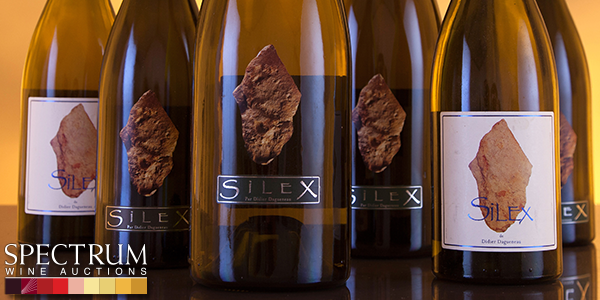
Thus we want to pay homage to this extraordinary man and the incomparable wines he fashioned.  We are proud to offer aSummer 2015 Auction that features nearly three dozen rare lots of Didier Dagueneau’s wines extending from the 1993 vintage to the 2007 vintage (his last).  The current offering includes the 1995 and 1997 vintages of En Chailloux including both bottle and magnum formats, the 1993-2007 vintages of Silex including both bottle and magnum formats, and the 1993-2006 vintages of Pur Sang.

En Chailloux is a beautiful blend of fruit from several stellar vineyard sites in Pouilly-Fumé.  The Silex emanates from multiple parcels of 50+-year-old vines in silex-rich soils atop the butte above Saint-Andelain and has traditionally been vinified in Dagueneau’s unique “cigare” barrels and then finished in tank.  The Pur Sang is a blend of 30+-year-old parcels grown in richer clay- and silex-rich soils in Saint-Laurent and is similarly raised.
Lot 2231. D. Dagueneau Pouilly-Fumé En Chailloux 1997. 1 Magnum, 1.5L.
Score: 89ST
Estimate: $150.00, Current Bid: $110.00
Lot 2217. D. Dagueneau Pouilly-Fumé Pur Sang 1993. 1 Bottle, 0.75L.
Score: 89WS
Estimate: $70.00, Opening Bid: $55.00
Lot 2215. D. Dagueneau Pouilly-Fumé Pur Sang 1995. 1 Bottle, 0.75L.
Score: 95WS
Estimate: $70.00, Opening Bid: $55.00
Lot 2214. D. Dagueneau Pouilly-Fumé Pur Sang 1996. 3 Bottles, 0.75L.
Score: 94WS
Estimate: $180.00, Opening Bid: $150.00
Lot 2210. D. Dagueneau Pouilly-Fumé Pur Sang 1998. 1 Bottle, 0.75L.
Score: 92WS
Estimate: $70.00, Current Bid: $50.00
Lot 2211. D. Dagueneau Pouilly-Fumé Pur Sang 1998. 1 Bottle, 0.75L.
Score: 92WS
Estimate: $70.00, Opening Bid: $50.00
Lot 2209. D. Dagueneau Pouilly-Fumé Pur Sang 2002. 1 Bottle, 0.75L.
Score: 96WS
Estimate: $95.00, Opening Bid: $80.00
Lot 2207. D. Dagueneau Pouilly-Fumé Pur Sang 2003. 1 Bottle, 0.75L.
Score: 92WS
Estimate: $75.00, Opening Bid: $60.00
Lot 2208. D. Dagueneau Pouilly-Fumé Pur Sang 2003. 1 Bottle, 0.75L.
Score: 92WS
Estimate: $75.00, Opening Bid: $60.00
Lot 2206. D. Dagueneau Pouilly-Fumé Pur Sang 2004. 3 Bottles, 0.75L.
Score: 95WS
Estimate: $250.00, Current Bid: $175.00
Lot 2205. D. Dagueneau Pouilly-Fumé Pur Sang 2006. 1 Bottle, 0.75L.
Score: 94+JG
Estimate: $75.00, Current Bid: $60.00
Lot 2229. D. Dagueneau Pouilly-Fumé Silex 1995. 1 Bottle, 0.75L.
Score: 92WS
Estimate: $120.00, Opening Bid: $80.00
Lot 1428. D. Dagueneau Pouilly-Fumé Silex 1996. 1 Bottle, 0.75L.
Score: 93WS
Estimate: $120.00, Current Bid: $136.00
Lot 2228. D. Dagueneau Pouilly-Fumé Silex 1996. 1 Bottle, 0.75L.
Score: 93WS
Estimate: $120.00, Opening Bid: $90.00
Lot 2225. D. Dagueneau Pouilly-Fumé Silex 1998. 1 Bottle, 0.75L.
Score: 90WS
Estimate: $85.00, Opening Bid: $60.00
Lot 2224. D. Dagueneau Pouilly-Fumé Silex 1999. 2 Bottles, 0.75L.
Score: 93WS
Estimate: $170.00, Opening Bid: $130.00
Lot 2223. D. Dagueneau Pouilly-Fumé Silex 2002. 2 Bottles, 0.75L.
Score: 95WS
Estimate: $325.00, Opening Bid: $225.00
Lot 2221. D. Dagueneau Pouilly-Fumé Silex 2003. 1 Bottle, 0.75L.
Score: 93WS
Estimate: $85.00, Opening Bid: $65.00
Lot 2222. D. Dagueneau Pouilly-Fumé Silex 2003. 1 Bottle, 0.75L.
Score: 93WS
Estimate: $85.00, Opening Bid: $65.00
Lot 2220. D. Dagueneau Pouilly-Fumé Silex 2004. 1 Bottle, 0.75L.
Score: 96WS
Estimate: $85.00, Current Bid: $65.00
Lot 2232. D. Dagueneau Pouilly-Fumé Silex 2005. 1 Magnum, 1.5L.
Score: 96WS
Estimate: $325.00, Current Bid: $225.00
Lot 1426. D. Dagueneau Pouilly-Fumé Silex 2007. 1 Magnum, 1.5L.
Score: 94WS
Estimate: $190.00, Current Bid: $195.00

Tuesday, February 3, 2015

Introducing The Spring 2015 Live Auction Featuring The Hudson Highlands Collection

(IRVINE, Calif.) - Irvine, California-based Spectrum Wine Auctions LLC, one of the world's leading fine and rare wine auction houses, is pleased to announce that it will be selling The Hudson Highlands Collection this Spring in both a live auction in Los Angeles as well as in specialized Internet auctions conducted through its feature-rich website and state-of-the-art online bidding platform. The Spring 2015 Live Auction Featuring The Hudson Highlands Collection will take place on Saturday 14 March 2015 at SoHo House West Hollywood, and it will be preceded by The February 2015 Distinguished Cellar Series Internet Auction that will run from Friday 6 February through Thursday 12 February.


The Hudson Highlands Collection, valued in excess of $1 million, includes many of the world's greatest wines consigned by one of the world’s foremost wine collectors. Upon building an illustrious career as an East Coast real estate magnate, this collector decided that the next challenge in his life would be to build one of the largest and most impressive wine cellars in the world. Decades of his life were dedicated to traveling throughout Europe, learning about wine, meticulously building his cellar, and continuously tasting and adjusting course along the way.

The 10,200+ bottles in this series of auctions from The Hudson Highlands Collection were stored since their acquisition in an impeccably curated, custom-built, temperature- and humidity-controlled underground wine cellar in the foothills of the Appalachian Mountains. While the consignor proudly admitted to a distinct preference for Premier Cru Classé Bordeaux, he did not discriminate against the other great regions of the world. This collection’s repertoire is as widely inclusive of the world’s top wine regions as it is deep, touching on a seemingly comprehensive range of top-tier producers’ wines in various colors, styles, vintages, grape varieties, and formats.  The finest wines of France, Italy, Spain, the United States, Portugal, Germany, Austria, Australia, and Argentina are, of course, all amply represented here.
 
The Hudson Highlands Collection boasts several selections of pristine Premier Cru Classé Bordeaux, including lots of the renowned 2010 vintage from the legendary Châteaux Pétrus, La Fleur-Pétrus, Margaux, Haut-Brion, and Cheval Blanc. Domaine Armand Rousseau highlights include 6-bottle lots from the 2009 vintage of Chambertin, Chambertin-Clos de Bèze, Gevrey-Chambertin 1er Cru Clos Saint-Jacques, Ruchottes-Chambertin Clos de Ruchottes, Charmes-Chambertin, and Gevrey-Chambertin 1er Cru Cazetiers. Screaming Eagle appears in the 2005-2009 vintages, several of which are in magnum (1.5L) format. Other noteworthy large formats on offer include Château Mouton Rothschild 1982 and Colgin Herb Lamb Vineyard 1996 in double magnum (3L) formats, Bryant Family Vineyard Cabernet Sauvignon 1997 in magnum, and Opus One 1995 in imperial (6L).  The collection also features a vertical of Krug’s glorious Clos du Mesnil Blanc de Blancs Brut spanning the 1981 through 1998 vintages.  Other featured producers include Domaine Leflaive, Ramonet, Robert Arnoux, Etienne Sauzet, Jacques Prieur, Sylvain Cathiard, Henri Boillot, Joseph Drouhin, Louis Jadot, Lucien Le Moine, Domaine de la Romanée-Conti, Méo-Camuzet, M. Chapoutier, Gaja, Bruno Giacosa, Roberto Voerzio, López de Heredia, CVNE, Dominio de Pingus, Vega Sicilia, Bryant Family, Marcassin, Sine Qua Non, Bond, Opus One, Philip Togni, Salon, F.X. Pichler, and many, many more.

The Hudson Highlands Collection Highlights


-          Full case (12 Bottles) of Château Margaux 2010 (Estimate: $8,000)
-          Full case (12 Bottles) of Château La Mission Haut-Brion 2003 (Estimate: $2,000)
-          6 Bottles of Château Haut-Brion 2010 (Estimate: $3,250)
-          10 Bottles of Château Beauséjour Duffau-Lagarrosse 1990 (Estimate: $6,000)
-          6 Bottles of Château Cheval Blanc 2010 (Estimate: $4,000)
-          6 Bottles of Pétrus 2010 (Estimate: $15,500)
-          1 Double Magnum (3L) of Château Mouton Rothschild 1982 (Estimate: $4,250)
-          1 Bottle of Barbeito Terrantez 1795 (Estimate: $3,000)
-          1 Bottle of Quinta do Noval Vintage Porto Nacional 1963 (Estimate: $1,400)
-          6 Bottes of A. Rousseau Chambertin 2009 (Estimate: $6,000)
-          6 Bottles of J. Prieur Montrachet 2010 (Estimate: $5,000)
-          6 Bottles of S. Cathiard Vosne-Romanée Aux Malconsorts 2010 (Estimate: $2,750)
-          2 Magnums (1.5L) Château de Beaucastel Châteauneaf-du-Pape Hommage a Jacques Perrin 1990 (Estimate: $2,250)
-          2 Bottles of Screaming Eagle Cabernet Sauvignon 2007 (Estimate: $4,250)
-          4 Bottles of Krug Clos du Mesnil 1990 (Estimate: $4,000)

-          Full Case (12 Bottles) of G. Quintarelli Amarone della Valpolicella 2003 (Estimate: $3,500)


Thursday, August 28, 2014

Bordeaux 2009/2010: “An Embarrassment of Riches"


By Dan Rhodes

The Santa Monica home of wine impresario Martin Weiner recently provided those lucky enough to snag a ticket the rare opportunity to taste and evaluate, side-by-side, several of these two monumental vintage’s top productions. Monsieur Weiner and his gracious wife generously provided all with a night to remember. The evening chez Weiner included not only a line-up of fabulous wines but also a lifetime of memories in conjunction with a superb home-cooked repas, copious amounts of laughter and a gala joie de vivre which extended throughout the evening and was readily enjoyed by all in attendance.
One can imagine that tastings of this sort will provide enjoyable and provocative conversation for decades to come as Bordeaux aficionados and wine collectors of all ilk debate the relative merits of the legendary wines derived from these back-to-back championship seasons. Both vintages showed well and both had their adherents with some participants preferring the opulent fruit richness and velvety plush textures of 2009 while others opted for the more structured, linear and classically configured 2010s. By the end of the evening, both vintages had impressed, persuaded and conquered!
I found it personally interesting and revealing that my preferences vis-à-vis 2009 and 2010 varied with each flight. Upon reflection, I surmised that the strengths of each vintage flattered each commune in a different way providing some with a bit more power and fortitude while granting others an overall sense of grace and finesse. Clearly, this is a tasting paradigm that can be used as an informative vehicle to not only accentuate the marked differences between 2009 and 2010 but also to compare and contrast the vinous identities of each commune as engendered by the subtle differences of terroir which define both the Médoc and the Right Bank.
What follows are some of my thoughts and impressions (no scores) with regards to this incredible, star-studded line-up!

Château Pontet Canet (Pauillac)
The 2009 impressed immediately via its opulent palate of sundry black fruits accented admirably with classic Pauillac nuances of graphite, lead pencil and creosote. Very 2009 --- the wine’s polished tannins and plush, velvety texture referenced the proverbial “iron fist in the velvet glove” and made friends quickly. The 2010 Pontet Canet was quite the opposite: reticent, shy and very linear. With a bit of coaxing, an assemblage of sundry red fruits eventually emerged for the palate along with the instantly recognizable and classic Pauillac nose.  Many at our table preferred the 2010. I personally preferred the 2009, at least in the moment. My guess is that 2010 will wine the race in the long term with 2009 being more of a sprinter. What Tesseron has accomplished at Pontet Canet is truly remarkable in that the wine is classified 5eme Cru Classé. Yet I can’t help but note, as did several others, that wines from Pontet Canet are starting to taste slightly contrived --- almost Napa-like in terms of the overall fruit richness and palate textures that are delivered. It will be interesting to monitor the evolution of this estate over the near future.

Château Leoville Poyferré (St. Julien)
I have always been fascinated by Leoville’s troika of Las Cases, Barton and Poyferré. All   three estates capture the best of what St. Julien can offer yet in such completely different ways. To me, they are like a family of sisters each with her own unique and individualized style:  Las Cases --- the oldest sister, the grand dame if you will with the most savoir-faire who knew how to marry well, Barton --- the practical and independently-minded middle sister who went off and got a business degree and then there’s Poyferré --- the youngest sister who simply enjoyed driving around in sports cars, playing tennis and hanging out poolside at the country club.
Leoville Poyferré has always been, in my estimation, a whimsical wine. Some are great, some not so great and many have been in-between. Recently, however, Poyferré has finally settled down a bit to embrace a high-quality level of consistency. The 2009 and 2010 productions from Leoville Poyferré are, to my mind, the best ever from this property. Both vintages showed really well chez Weiner with our table basically evenly split between the two.
Once again, I preferred the 2009. The wine’s luxurious and creamy textures are simply beguiling and speak to the classic accessibility and well-honed richness which wines from St. Julien typically offer. Both the 2009 and 2010 capture the magical essence of St. Julien terroir in conjunction with savory red currant/mixed cherry fruits. The 2010, as one would imagine, proffers a bit more structure and austerity which should not be thought of pejoratively. I would describe the 2009 as a bit more juicy. But in the end, it’s a quibble over straws as both wines deliver spectacular quality. There are no bad choices here!

Château Palmer (Margaux)
I must confess to being a long-time devotée of Château Palmer. Consistency issues aside, it should be duly noted that when Palmer is “on”, there is nothing else like it. I therefore was looking forward with great anticipation to the Palmer flight and watched, almost hypnotically, the distinctive black and gold labeled bottles circle the table as each participant poured their allotment.
Finally the bottles arrived to my setting and as I poured with bated breath, I wondered which vintage would impress the most.  For me, it was 2010! The structure and power enabled by the harvest elevated the wine to the next level of enjoyment; namely to a more intellectual niveau in which nuances of terroir permeated both the bouquet and palate. The 2009 Palmer is a superb wine which is expressive of gorgeously ripe plum/cherry/black cherry fruit. But the 2010 transcends the genre in contributing glorious nuances of sundry floral, spice and nutmeg to the nose along with subtle intricacies to the palate which reference, in pointillist fashion, the difference between a great wine and a great Château Palmer from the commune of Margaux.
Having said all of that, any Bordeaux lover or Palmer aficionado would be happy to own either one (or both) of these spectacular wines. Both will live long as post-modern testimonials to the possibility of perfection.

Château Montrose (St. Estèphe)
Wines from St. Estèphe, Montrose in particular, tend to be more tannic, traditional affairs. So it came as no surprise to me that I preferred the 2009 Montrose to the 2010 --- at least at this point in time. Again, both wines are spectacular but for very different reasons. In comparing (at least by Montrose standards) the sumptuous ripe fruit of 2009 with the structured linearity of 2010, I was struck by the appropriately analogous comparison of a medieval Romanesque cathedral with a columned Greek temple of antiquity. Both are works of art which capture simultaneously our imagination and admiration. Both touch and excite something core in our being. The same may be said of the 2009 vs. 2010 Montrose. The 2009 Montrose is fairly plump, particularly by Montrose standards, in delivering luxurious vectors of sundry black fruits expressive of cherries, plums and currants. This is about as hedonistic as Montrose is going to get. Yet the underlying, clay-driven fundamentals of St. Estèphe terroir shone through brightly and clearly to blunt criticism of the 2009 vintage which I have heard from some concerning “authenticity” issues. The 2010 Montrose is embryonic. At this point in time, its flavor profile is not readily perceptible although one can clearly discern subtle nuances and strands of sundry red fruits, earth and spice. The potential for greatness is obvious! Time will be the ultimate judge concerning the Montrose question. But for now, at least to this palate, 2009 is the clear winner. Let’s meet and taste again in 10 years!

Château l’Evangile (Pomerol)
Finally, a Right Bank wine! And what a flight! For some the flight of the night! I would be hard pressed to choose a favorite. For me, this flight was a flat out, dead-on tie. Both wines spectacular! Pomerol remains one of my favorite communes in Bordeaux and is my decided “go-to” in terms of the Right Bank. The 2010 l’Evangile is a tour de force that verily delivers perfection in providing the imbiber with richness, grace and elegance that’s proportionately measured and balanced in conjunction with all of its components. So harmonious is the wine that it was actually quite difficult to pick-out and discern individual strands of flavor. Each flavor thread is combined skillfully with the next so as to produce a whole which, ultimately, exists in unified fashion as an entity greater than the sum of the parts.
The 2009 l’Evangile, in similar fashion, delivers a near-perfect wine. Pomerol, by its very nature, produces artisinal wines. This extraordinary effort captures the very essence of Pomerol --- its unique identity and singular focus to the Merlot grape. In similar fashion to the 2010, the wine is perfectly proportioned and harmonious with wave after wave of sensuality available to the tongue and palate. The equilibrium, harmony and balance of both the 2009 and 2010 l’Evangile replicates a high-wire act akin to a cirque du soleil production in terms of choreographed intricacy. Neither wine should be missed by any self-respecting Bordeaux aficionado or collector.

Château La Mission Haut Brion (Pessac-Léognan)
For many at our table, this was the most disappointing flight of the night. Not quite sure why. All of us expressed similar anticipatory thoughts regarding both the 2009 and 2010 in terms of their stature as monumental giants of the vintage. Don’t get me wrong; both were quite good but frankly, at least to this palate, neither lived up to their advance billing. After all, RMP scores for these two are 100 and 98+ points respectively. If pressed, I would give a slight nod to the 2010.
The l’Evangile flight was a tough act to follow so perhaps that had an effect on our perception. Of course, one can always discuss and think about bottle variation or improperly stored wines. Most at our table thought the wines to both be a bit over-extracted and slightly “hot” with very little expression of the renowned Pessac terroir. That this notion was in play for both vintages speaks to me of a potential shift in winemaking philosophy away from a more traditional expression of La Mission towards, dare I say the word, a more Parkerized or modern version. Given my long fidelity to La Mission and her wines, I hope this is not the case and look forward anxiously to another test drive. After all, at least to this palate, the appeal of La Mission, specifically, and Pessac wines, in general, is the distinctive expression of a very unique place. It would be a shame for one of the great estates of Bordeaux to turn its back on this singular soil and location.

Château Haut Brion (Pessac- Léognan)
Haut Brion, along with Margaux and Latour, are my three favorite first growths. Just about every vintage, these three take my gold, silver and bronze.  The Haut Brion flight was a grand slam! It was one of the top flights of the night and drew rave reviews from all who partook.  The wines presented themselves in Jungian-like fashion with the 2009 playing the feminine anima to the 2010’s more pronounced masculine animus. Yet both shared a remarkably similar flavor profile incorporating an extraordinary delineation of mixed red and black fruits accented superbly with classic nuances of Pessac terroir, tobacco smoke, tea leaf and carob. I cannot say enough about the consistency of Château Haut Brion. Year-in and year-out this wine outperforms both the parameters of the vintage as well as its price point. Bordeaux collectors and wine lovers in general will be able to enjoy for decades the extraordinary yin-yang of 2009 and 2010 Haut Brion!

Château Mouton Rothschild (Pauillac)
Both the 2009 and 2010 Mouton showed well. To my palate, the 2010 was slightly more impressive in that it incorporated a bit more structure along with a genuine sense of place which I found quite pleasing. Perhaps no other flight delineated as clearly the stylistic differences between these two great vintages. The 2009 Mouton is a sexy wine which utilizes the ripeness engendered by the harvest as a binder for the wine’s creamy cherry vanilla, plush and velvety smooth fruit. Tasty hints of graham cracker, spice and white chocolate are incorporated into the mix to provide additional nuance and complexity.
The 2010 Mouton, as noted above, is a bit more structured with a discernible tannic structure which provides the backbone for the wine’s darker fruit composition of plum, black cherry and dark currants. Hints of cocoa and carob abound which, when combined with the wines superb delineation of Pauillac dirt, provides a luxurious First Growth journey that is completely resplendent of the estate and wholly Mouton in its commitment to excellence. The preference for 2010, at least at our table, was virtually unanimous.

Château Lafite Rothschild (Pauillac)
Lafite does it again! This was one of the top flights of the evening with both wines showing spectacularly well. I would be hard pressed to prefer one over the other but, if pressed, would go (most hesitatingly, I would add!) with the 2010 while retaining a long and lingering look back at the glorious 2009.  Both are magnificent! With wines such as these, it becomes verily impossible to delineate the various flavor strands and individualized components of essence. Suffice it to say, both wines live up to the Lafite reputation for being the most patrician of the Bordeaux First Growth wines. Both wines verily approach an almost unobtainable quality zenith in proffering to the imbiber or collector a rarified vision of regal grandeur which incorporates an artistic expression juxtaposing a true sense of place and a refined winemaking vision while also incorporating the salient characteristics of their relative vintages of origin. Are they expensive and difficult to procure?  Yes, but what price perfection! Bravo Lafite!

SUMMARY
Let’s just call this the shameless, commercial portion of this blog contribution! As an auction house, Spectrum is committed to Bordeaux: the region, the wines and the people. Our staff is extraordinarily knowledgeable about the genre --- both current offerings and older releases. Whether you are a consignor or buyer, imbiber or admirer, collector or aficionado, feel free to contact us here regarding any and all of your Bordeaux needs. You will find us to be friendly, polite and responsible. Our goal is to make your auction experience as pleasant, hassle free and rewarding as we can. We look forward to hearing from you!

Top flights (in no particular order) --- l’Evangile, Haut Brion, Lafite Rothschild, Leoville Poyferré, Palmer
Most disappointing flight --- La Mission Haut Brion
Most difficult flight to assess --- Montrose
2009 vs. 2010 --- Final Score = 2010-4/2009-3/Tie-2 (l’Evangile, Haut Brion)

Thanks once again to Martin Weiner and his LA School of Wine for putting together this spectacular, once-in-a-lifetime event!